Our Technologies | costa mesa, ca
The Qest4.
A non-invasive biofeedback assessment that reads your body's stress patterns and sends you home with a personalized tincture made from your own scan data.
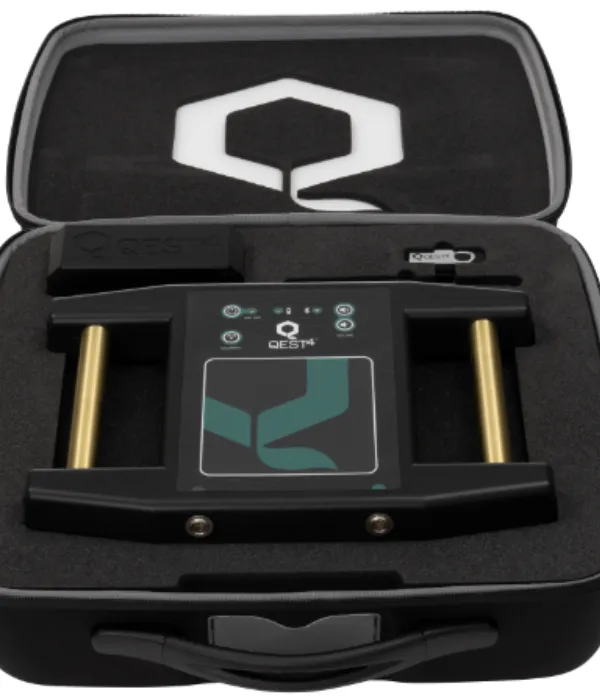
Qest4 measures your body's response to thousands of digital frequency signatures, maps where you are holding energetic stress and imbalance, and imprints a personalized tincture unique to your scan all in a single visit at Ascent.
How It Works
The body holds the signal. Qest4 reads it.
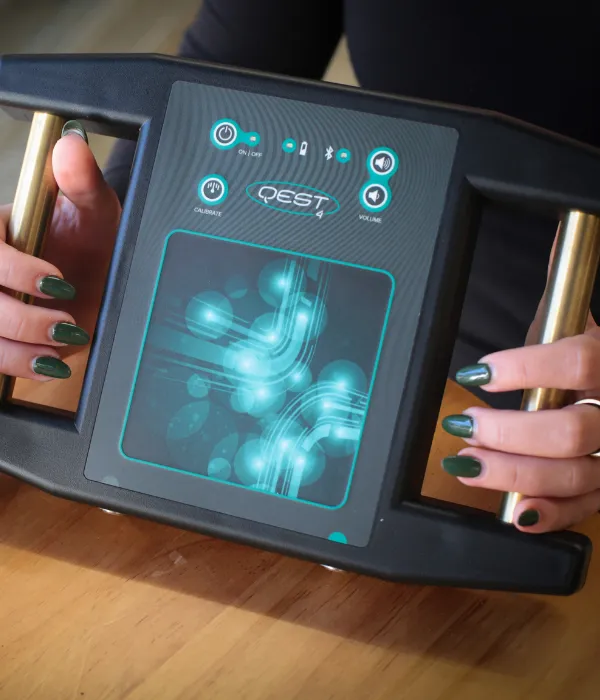
A Qest4 session is a bioenergetic assessment that measures your body's response to thousands of digital frequency signatures. You hold two brass hand electrodes while the device measures subtle changes in skin conductivity and biofeedback responses across meridian points mapped by Traditional Chinese Medicine and electroacupuncture according to Voll.
The Qest4 software interprets that response across thousands of energetic items and generates a structured map of where the body is holding stress, imbalance, and priorities for support. The output is not a diagnosis. It is a wellness roadmap that guides conversations about recovery, stress, resilience, and personalized health optimization.
When the final scan is complete, Qest4 imprints a personalized tincture encoded with the specific energetic information identified in your scan. You leave with it in hand. Cynthia follows up with detailed recommendations that give you the complete picture.
"Most clients have a sense that something is off but cannot name it. Qest4 gives us a starting point, a structured read of where the body is under the most strain, so the rest of the protocol stops being a guess."
The Ascent Collaborative
WHAT THE SCAN READS ACROSS
Qest4 looks for energetic stress patterns related to:
Digestive function
Hormones
Nutrient needs
Environmental toxins
Food sensitivities
Emotional stress
Organ system stress
Immune challenges
Qest4 is a wellness assessment tool, not a medical diagnostic test. Findings such as nutrient deficiencies, environmental exposures, or immune challenges should be confirmed with appropriate laboratory testing before any clinical decisions are made.
benefits
What clients report from a Qest4 session.
A clearer sense of direction
Instead of guessing where to start, clients leave with a structured read of their body's current stress pattern and a wellness roadmap shaped to it.
Validation of what they already feel
Patterns clients have sensed for years often show up on the scan. Naming them makes the next steps feel grounded and actionable.
A starting baseline
The initial scan becomes a reference point. Follow-up scans show how the body's response shifts over weeks and months of protocol work.
Insight into hidden stressors
Digestive function, hormones, environmental toxins, food sensitivities, and emotional load often show up on the scan even when day-to-day symptoms feel mild or vague.
Personalized tincture created from their own data
Clients leave the same visit with a tincture imprinted by Qest4 based on their scan findings: not a generic supplement, a physical output of their unique energetic map.
Targeted, complete plan from Cynthia
Cynthia reviews the full scan data and follows up with detailed recommendations sequenced to move the needle first: the right Ascent technologies, supplements, and lifestyle shifts in the right order, not a random list.
Client outcomes vary. Qest4 is a practitioner screening and wellness assessment tool informed by Traditional Chinese Medicine and bioenergetic principles. It is not a diagnostic device and is not intended to diagnose, treat, cure, or prevent any disease.
great For
Qest4 is built for people who want to start with data.
Most clients come to Ascent because they want to feel different. Qest4 is the entry point for those who also want to understand the body's current pattern before they commit to a protocol.
The first-time client
New to Ascent and unsure which technologies fit. Qest4 turns the first visit into a structured starting point instead of a guessing exercise.
The unexplained symptom seeker
Years of vague fatigue, brain fog, digestive issues, or low resilience that traditional workups have not explained. Qest4 widens the lens.
The data-driven optimizer
Wants a baseline, a follow-up scan, and a measurable read on how the body's response is shifting over time.
The protocol resetter
Returning clients planning a seasonal detox, a post-illness rebuild, or a new phase of work. The scan recalibrates direction.
What a Session Feels Like
Your first visit, step by step.
There is no intake form. The scan does the assessing. Cynthia opens with a brief health discussion, the technology reads the body, and you leave the same visit with a personalized tincture already in hand.
01
Health discussion
Cynthia opens with a brief conversational review of your current health picture and what brought you in. No forms, no lengthy history taking. A short, focused conversation that orients the session before the scan begins.
02
The scan
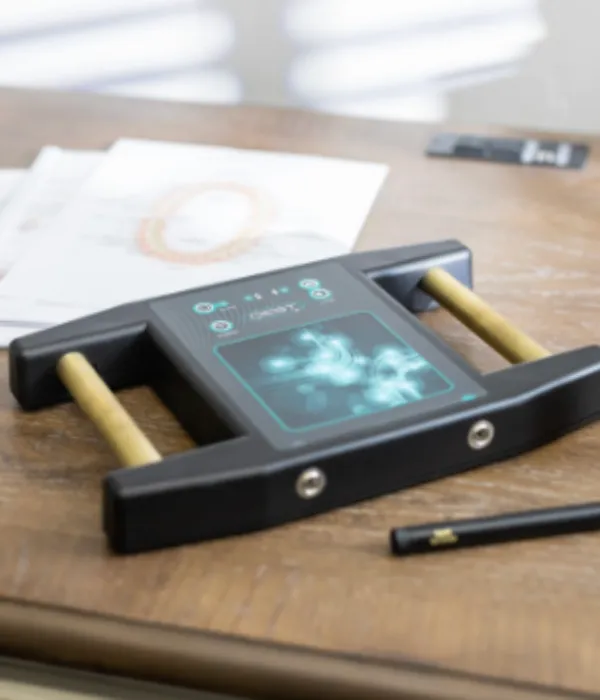
You hold two brass hand electrodes while Qest4 measures your biofeedback responses to thousands of digital frequency signatures. The process is completely non-invasive. You feel nothing. The scan runs for a few minutes and generates your personalized energetic map.
03
In-session review and tincture
Cynthia walks you through the key findings, surfacing the stress patterns and naming the areas of energetic imbalance. Once the scan is complete, Qest4 imprints a personalized tincture encoded with the specific energetic information identified in your scan, and you leave the same visit with that tincture in hand.
04
Detailed follow-up from Cynthia
After reviewing the complete picture across all scans, Cynthia follows up with detailed recommendations tailored to your full energetic profile. Recommendations may include supplements, nutrition changes, lifestyle modifications, and Ascent wellness therapies.
The Science
Electrodermal signal, structured insight, personalized tincture. That's the mechanism.
Qest4 sits inside a category of tools built on electrodermal activity, the measurable change in skin conductance that reflects autonomic nervous system response. EDA is well-established in stress research and is the same foundational signal used in galvanic skin response studies and modern wearable stress monitors.
Where Qest4 differs is the mapping and the output. The system measures biofeedback responses to thousands of digital frequency signatures at acupuncture meridian points in the EAV tradition, interprets the response across a structured library of energetic items, and then imprints a personalized tincture encoding the specific energetic information identified in the scan into a liquid the client takes home.
The output is evidence-informed and experience-tested: rooted in published EDA and EAV science, refined over years of in-studio use at Ascent, and intentionally framed as wellness assessment rather than medical diagnosis.
Session basics at a glance
Length
45 to 60 minutes
Frequency
Baseline, then every 6 to 12 weeks
Position
Seated, calm room, brass hand electrodes
What Happens
Brief health discussion, non-invasive biofeedback scan, in-session review, personalized tincture imprinted and ready before you leave
Not For
Pacemakers, implanted electrical devices — physician clearance advised
Studies & Research
The evidence behind the Qest4 approach.
Qest4 as a specific device does not have independent peer-reviewed clinical trials in indexed medical databases. The foundational science underneath it, electrodermal activity and acupuncture point conductance, has a limited but growing evidence base. The studies below cover modality-level science, not the Qest4 brand specifically. Ascent uses Qest4 as a wellness assessment tool, not as a diagnostic device, and we are intentional about that framing.
Modality Research
PubMed
Electrodermal Activity and Stress Assessment
Foundational review of electrodermal activity as a measurable signal of autonomic stress response. Establishes EDA as the underlying physiological mechanism that bioenergetic assessment tools, including Qest4, are built on.
Modality Research
OBM Integrative and Complementary Medicine
Electrodermal Activity on Acupuncture Points After Exercise
A feasibility study measuring electrodermal activity specifically at acupuncture meridian points after physical exertion. Directly supports the methodology that EAV-based systems like Qest4 use to map the body's stress response.
Modality Research
PMC
Clinical Validation of Non-Invasive Electrodermal Biofeedback for Chronic Pain
A multi-center study of 1,015 participants validating a non-invasive electrodermal biofeedback platform for chronic pain and inflammation. Supports the broader category of electrodermal screening as a useful, non-invasive clinical input.
Mechanistic Context
Electrodermal response
Skin conductance shifts with autonomic activity. Measuring those shifts gives a non-invasive read on how the body is responding to stress, in real time.
Meridian mapping
Qest4 reads conductance at acupuncture points used in the EAV tradition. The mapping links measurable skin response to a structured framework of energetic systems.
Pattern recognition
The software interprets the response across thousands of items, surfacing the patterns a practitioner uses to design a more personalized protocol.
Qest4 is a wellness assessment tool informed by Traditional Oriental Medicine and bioenergetic principles. It is not a diagnostic device and findings are interpreted alongside client history, symptoms, and other appropriate assessments.
Practitioner
Guided by the people who built this practice.

The Ascent Collaborative
Cynthia Caamano
Integrative Health Practitioner
Cynthia leads all Qest4 sessions at The Ascent Collaborative. Her role is not to assess. Qest4 does that. She opens each session with a brief health discussion, guides you through what the findings mean during the session, and follows up afterward with detailed recommendations built on the complete picture across all scans.
Clients leave every session with a personalized tincture already in hand. The full protocol follows from Cynthia, thoughtful, whole-picture, and informed by everything the data showed.
Recommendations may include supplements, nutrition changes, lifestyle modifications, and Ascent wellness therapies.
Frequently Asked
Qest4, answered.
What is Qest4 bioenergetic testing?
A Qest4 session is a non-invasive biofeedback assessment that measures your body's response to thousands of digital frequency signatures. It identifies potential stress patterns and areas of energetic imbalance, and uses those findings to create a personalized wellness roadmap, including a personalized tincture imprinted from your own scan data before you leave.
How long does a Qest4 session take?
Plan on 45 to 60 minutes. Cynthia opens with a brief health discussion, the scan runs for a few minutes, she walks you through the key findings, and Qest4 imprints your personalized tincture before you leave. Cynthia follows up after the session with detailed recommendations based on the complete picture.
Is Qest4 a diagnostic test?
No. Qest4 is a wellness assessment tool informed by Traditional Oriental Medicine and bioenergetic principles. It does not diagnose, treat, cure, or prevent any disease and does not replace physician evaluation, blood work, imaging, or other medical testing. Findings should be viewed as complementary wellness information rather than definitive medical evidence.
How is Qest4 different from MEAD or F-Scan?
All three are bioenergetic assessment tools available at Ascent and each serves a different role. Qest4 delivers the broadest energetic picture and imprints a personalized tincture based on the findings. It is most often the starting point. MEAD maps meridian energy specifically, often used before and after BioModulator sessions. F-Scan identifies frequency sensitivities and is often paired with light therapy. Many clients use more than one over time and Cynthia can advise which combination fits your goals.
What is the personalized tincture and what do I do with it?
After your final scan is complete, Qest4 imprints a personalized tincture encoded with the specific energetic information identified in your session. This tincture is unique to your scan data, not a generic supplement. You leave with it in hand at the end of every session.
What can Qest4 highlight?
Qest4 looks for energetic stress patterns related to digestive function, hormones, nutrient needs, environmental toxins, food sensitivities, emotional stress, organ system stress, and immune challenges. Findings are interpreted as wellness information, not medical diagnosis. Where findings suggest specific concerns such as nutrient deficiencies or environmental exposures, Cynthia may recommend appropriate laboratory testing to confirm before any clinical decisions are made.
Is Qest4 safe? Are there any contraindications?
The scan is completely non-invasive and most clients feel nothing during the assessment. Caution is advised for those with pacemakers or implanted electrical devices. Physician clearance is recommended when in doubt.
How often should I do a Qest4 assessment?
Most clients begin with a baseline scan then re-assess every 6 to 12 weeks to track how their energetic pattern is shifting and to adjust their protocol against real data rather than memory.
Who is Qest4 a good fit for?
It is a strong fit for first-time clients choosing a starting point in Ascent's technology stack, for people working through unexplained or vague symptoms, and for data-driven clients who want a measurable baseline to track over time. It is also a strong reset tool for returning clients beginning a new phase of protocol work.
begin your ascent
Experience Qest4 at The Ascent Collaborative.
Ascent has been integrating bioenergetic assessment into real client protocols since 2010, inside one of the longest-running biohacking and human optimization centers in the country. Cynthia Caamano leads the Qest4 work and turns the findings into a path you can actually follow.
Or call (949) 781-5769 · 150 Paularino Ave, Suite D-170, Costa Mesa, CA 92626
THE ASCENT COLLAB
Human optimization and regenerative wellness. Costa Mesa, Orange County, CA
Featured in Men's Journal as "The Gym of the Future"
Company


© 2026 The Ascent Collaborative. All rights reserved. | Privacy Policy
150 Paularino Ave, Suite D-170, Costa Mesa, CA 92626 | (949) 781-5769